
Saturday, 7 December 2013

Friday, 6 December 2013
180 degree editing rule

When filming you must not pass the 180 degrees line because it will disorientate the audience as when they go to look at one character from the other they will both look as though they are facing the same way.
"In film making, the 180-degree rule is a basic guideline regarding the on-screen spatial relationship between a character and another character or object within a scene. An imaginary line called the axis connects the characters and by keeping the camera on one side of this axis for every shot in the scene, the first character will always be frame right of the second character, who is then always frame left of the first. If the camera passes over the axis, it is called jumping the line orcrossing the line." - wikipedia
Thursday, 5 December 2013
starwars analysis- how is evilness created?
How
is evilness presented in this scene?
In the media text we are introduced by an evil
establishing shot of the old man sitting at a table with the natural light of
the city behind him, emphasising his “protagonist” character by showing him in
a moralistic/ less evil light. From this shot we assume him to be a antagonist
which soon deteriorates as the scene develops. To follow there is a low angle
shot of Anakin landing his aircraft, connoting his superiority within the scene
which could symbolise him being an antagonist/ protagonist of the scene. Within
the beginning of the scene Anakin is represented as an antagonist which,
deteriorates through the scene’s development. Anakin being an antagonist is
signified through the lighting within the start, Anakin’s face is lit up with
the lighting on his face which dims throughout the seem as by the end the
audience see him with dim lighting which could be a connotation of the evilness
building on him throughout the scene. Moreover, when Samuel L Jackson and the
old man fight Anakin shows emotions of being distressed by this which connotes
him to be an antagonist. Evilness is also presented through the respect Anakin
has for the protagonist when he is knelt in front of him looking up to him in
the end shot, as though he is begging to him. This shot ends the scene which a
connotation that evilness has developed from start to end of the scene through
the change in Anakin’s attitude towards evil. The two contradictory shots from
the establishing to the end shot would juxtapose one another and heighten his
change for the audience.
During the fight scene it becomes clear to the
audience that what they’re doing isn’t significant is away from the outside
world which is symbolic of the idea that what they’re doing is hidden, thus
evil. Moreover, during the fight there is several close up shots to the faces
of the characters showing the anger on their face/ evilness growing as they
become angrier throughout the conflict. Towards out of the fight when Samuel L.
Jackson is thrown out of the window an aerial shot is used to pan the vastness
of the city which is an emphasis on the evilness of the man throwing him out
into the city. As well as this the powerfulness of the man is connotated
through how far he throws the man through the pan shot used to emphasise this.
Throughout the fight the two characters use bright light sabres, the bright
colours of the weapons against the dark scenery could connote evil and sinister.
When Samuel L. Jackson inflicts some sort of “spell”
upon the older man, his face becomes old and withered, with non-humanistic
characters; this connotes evilness as the character becomes something unusual
to the audience, much like traditional evil characters for example the Devil. By
the end when Samuel L. Jackson is out of the scene, it becomes apparent that
the scene becomes a lot more fake, in that the scene is only lit up by
artificial light which connotes fakeness, the authority the old man has is
wrong, therefore the respect is wrong thus reflecting upon the idea that the
two are being evil.
The sound within the scene is significant through
the choice of diagetic and non diagetic sound. For example the old diagetic
sound of the man’s voice is significance because it sounds non humanistic and
“evil” through the extent of its deepness. The non diagetic however is
significant as the music used is typical of “evilness” in the upbeat, fast yet
horror style. Moreover tension is built in the fight scene through the use of
the fast pace, creating excitement for the audience. When the man is thrown out
of the window, an “evil” horror type sound music is used to emphasise the
evilness that has just occurred within the scene.
Evil is presented is potent within this media text
as the audience see it influence the actions of those involved in a negative
way, presented through the mise en scene, camera angles, lighting and sound.
Evilness is significant within Anakin and the old man “protagonist”.
Wednesday, 4 December 2013
codes and conventions
possible feeling a thriller could create:
tension
anxiety
uncertainty
suspense
anticipation.
iconography:
cars
weapons
fast paste
editslow
lighting
themes:
assassination
crime
spies
terrorism
supernatural
events
mind games
characters:
stalkers
spies
assassins
psychotic characters
convicts
From this research our group can concur that for our opening we will need to include certain type of
camera angles and editting in order to create a thriller. For example in order to create tension in our
thriller we will need to use quick jump cuts and low angle shots as well as dark lighting. Whereas to
create anticipation we will need to use long shots for the audience to feel suspense.
tension
anxiety
uncertainty
suspense
anticipation.
iconography:
cars
weapons
fast paste
editslow
lighting
themes:
assassination
crime
spies
terrorism
supernatural
events
mind games
characters:
stalkers
spies
assassins
psychotic characters
convicts
From this research our group can concur that for our opening we will need to include certain type of
camera angles and editting in order to create a thriller. For example in order to create tension in our
thriller we will need to use quick jump cuts and low angle shots as well as dark lighting. Whereas to
create anticipation we will need to use long shots for the audience to feel suspense.
Tuesday, 3 December 2013
typography

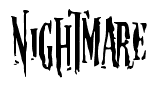
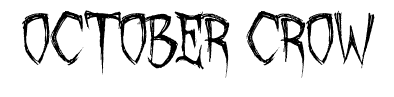


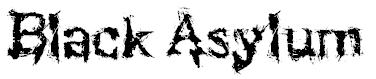
Above are some fonts that can be used in thrillers,usually used for the title of the film. In the title sequence they also use quite simple/minimalist fonts for names in the opening,some of the minimalist texts are animated with the style of the movie.
Our group feels that the font above would be most suited to a psychological thriller as it is similar to that which is used in shutter island-

The block and bold typography is to the point and professional, which we would like to reflect on our thriller opening.
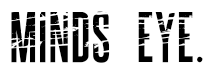
Possible movie titles using the chosen font:


Monday, 2 December 2013
Film Noir
What is noir?
Film Noir began in the 1940s and was one of Hollywood's original, artistic movements.
During and immediately following World War II, movie audiences responded well to this original,In 1946 a Paris retrospective of American films said that during the war there was a significant increase in popularity towards visually darker and more sublime films. It was then made that “film noir” ”or "black film" is a new type of Hollywood product.
Few, if any of the artists in Hollywood who made these films called them “noir” at the time. But the vivid co-mingling of lost innocence, doomed romanticism, hard-edged cynicism, desperate desire, and shadowy sexuality that was unleashed in those immediate post-war years proved hugely influential, both among industry peers in the original era, and to future generation of storytellers, both literary and cinematic.
To this day the debate goes on as to whether “noir” is a film genre, circumscribed by its content, or a style of storytelling, identified by its visual attributes. The debate — in which there is no right answer — is only one of the things that keeps noir fresh for successive generations of movie lovers.
Film Noir began in the 1940s and was one of Hollywood's original, artistic movements.
During and immediately following World War II, movie audiences responded well to this original,In 1946 a Paris retrospective of American films said that during the war there was a significant increase in popularity towards visually darker and more sublime films. It was then made that “film noir” ”or "black film" is a new type of Hollywood product.
Few, if any of the artists in Hollywood who made these films called them “noir” at the time. But the vivid co-mingling of lost innocence, doomed romanticism, hard-edged cynicism, desperate desire, and shadowy sexuality that was unleashed in those immediate post-war years proved hugely influential, both among industry peers in the original era, and to future generation of storytellers, both literary and cinematic.
To this day the debate goes on as to whether “noir” is a film genre, circumscribed by its content, or a style of storytelling, identified by its visual attributes. The debate — in which there is no right answer — is only one of the things that keeps noir fresh for successive generations of movie lovers.
Sunday, 1 December 2013
Questionaire
https://docs.google.com/forms/d/1GP7AD1w5HYSk0TCMnl-6XSkVduOCIc3bCtbSBfzP0W0/viewform
We will use this questionnaire in order for our group to have an insight to what our target audience should be as well as analysing which people like which sort of thriller and openings. For example from our questionnaire we could find out that boys at the age of 10-15 enjoy horror thrillers the most, which will help us to classify our thriller opening.
We will use this questionnaire in order for our group to have an insight to what our target audience should be as well as analysing which people like which sort of thriller and openings. For example from our questionnaire we could find out that boys at the age of 10-15 enjoy horror thrillers the most, which will help us to classify our thriller opening.
Subscribe to:
Posts (Atom)